Log Splitter Safety: Use the Exact Model Manual
Log splitter safety: one operator, hands on the sides of the log, eye and hearing protection, clearances, CO on gas models and where to find the manual.


Log splitter safety starts with one rule every manual repeats: one person loads the log and runs the control, nobody else within reach. Keep your hands on the sides of the log, never on the ends or near the wedge, wear safety glasses, and run a gas splitter only outdoors because of carbon monoxide. The exact limits of your machine are in its manual, so download it before the splitter arrives.
Affiliate disclosureAs an Amazon Associate we earn from qualifying purchases.
The rules that prevent most injuries
- One operator. Champion: the adult who loads and steadies the log must be the person who works the control. DR says the same for its kinetic splitters.
- Hands on the sides. Never on the ends of the log, between log and end plate, or between log and wedge. Let go once the wedge bites.
- Controls by hand only. PowerSmart forbids using a foot, a knee, a rope or any extension on the lever.
- One log at a time. WEN: never split two logs stacked on top of each other.
- Wait for the ram. Do not reach for a split piece until the ram has fully returned. Splits can snap shut on fingers (WEN).
- Jammed log? Stop and follow the manual's procedure. Never pull it free by hand.

Protective gear and the work area
Wear ANSI-rated safety glasses: Champion warns that pieces of log can be thrown out of the splitter. Add hearing protection for long sessions (WEN), sturdy boots and long pants (Penn State Extension), and skip loose clothing, jewelry and dangling sleeves that can be caught in moving parts.
| Rule | Distance or condition |
|---|---|
| Bystanders and objects | at least 10 ft (3 m) from the machine |
| Clear space around the splitter | at least 3 ft (0.9 m) on all sides |
| Dry vegetation | at least 5 ft (1.5 m) away |
| Ground | level, never on an incline; tires blocked, support leg secured |
| Indoors | never: not in garages, sheds, basements or any enclosure |
Gas and electric hazards
Gas splitters bring carbon monoxide. Champion's manual says running an engine indoors can kill within minutes, and asks you to keep the exhaust away from windows, doors and vents. Refuel outdoors with the engine off and cool: Champion asks you to wait at least 2 minutes.
Electric splitters bring the cord. Use a grounded outlet and a three-wire outdoor extension cord of the right gauge: 14 gauge up to 25 feet (WEN and PowerSmart), 12 gauge at 50 feet (WEN). Keep the machine out of rain and wet ground. The hydraulics are the same on both: oil escaping under high pressure can be injected under the skin, and Champion says to get medical attention immediately.
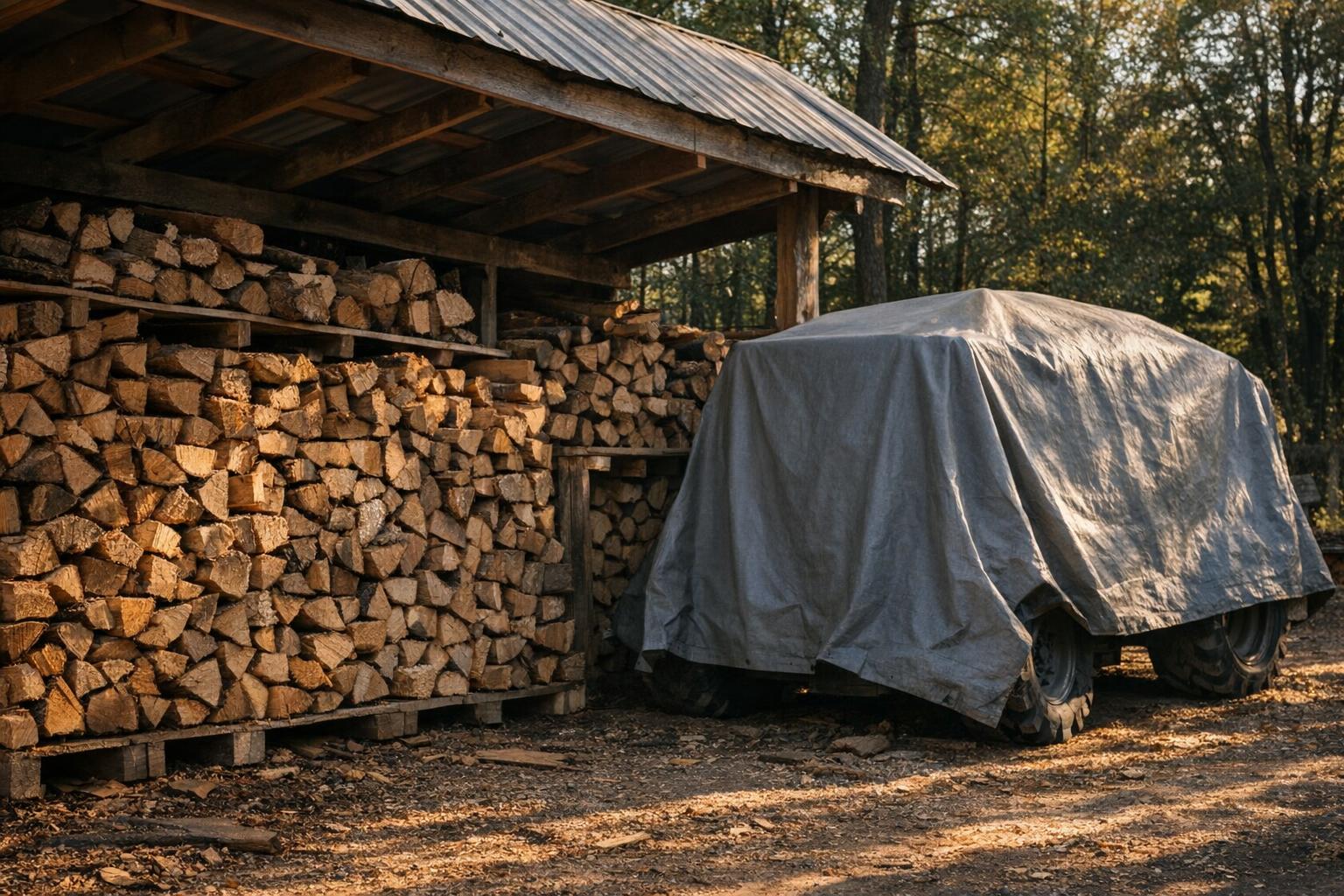
Where to find your log splitter manual
Most makers post their manuals as PDFs on their own support pages, so search the exact model number. Champion and DR (Generac) publish theirs on their own sites, and a store listing often links the PDF too. Read three sections before the first split: the safety rules, the controls and the jam procedure. Then keep the manual where the machine lives.
Buying used or a brand with no manual online? Ask the seller for it before you pay. A splitter with no instructions, no decals and an unknown oil is a risk you can avoid. Our buying guide and the maintenance guide cover the rest.
Questions buyers ask
Can two people operate a log splitter?
No. Champion and DR both say only one person should operate the splitter, and the person who loads and steadies the log must be the one working the control.
Where do I put my hands on a log splitter?
On the sides of the log only, never on the ends or between the log and the wedge or end plate. Remove your hand once the wedge starts to split the wood.
Can you run a gas log splitter in a garage?
No. Champion’s manual forbids running it inside any building, garages included, because engine exhaust contains carbon monoxide.
What safety gear do you need to split wood?
Safety glasses at minimum, plus hearing protection for long sessions, sturdy boots and long pants. Avoid loose clothing and jewelry near moving parts.
Our rated picks
Every model in our rankings comes with a maker who documents it. The YARDMAX YS0650 6.5-Ton Log Splitter (9.1/10) tops our 5–7 ton electric ranking: no fuel, no exhaust. The Landworks 20-Ton Gas Log Splitter (9.2/10) leads our main ranking of gas splitters, and the vertical mode of the BILT HARD 40-Ton Gas Log Splitter (9.1/10) means the heaviest rounds never have to be lifted.

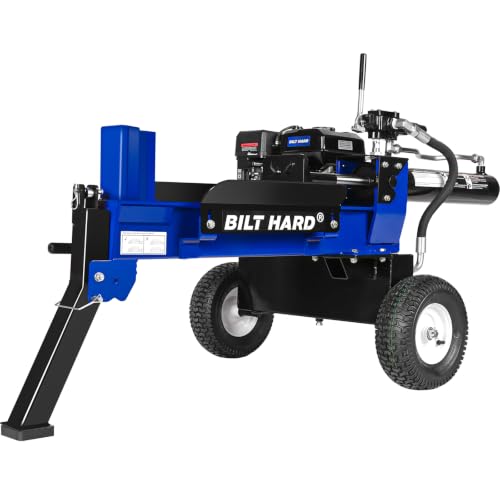

Product images: Amazon listings
Sources
- Champion Power Equipment — Operator's Manual, Model 201313 32-Ton Gas Powered Log Splitter (consulted Nov 2026)
- WEN Products — Model 56207 Lumberjack 6.5-Ton Log Splitter manual (consulted Nov 2026)
- PowerSmart (manual hosted by Lowe’s) — Instruction Manual, 6 Ton Electric Log Splitter Model PS90 (consulted Nov 2026)
- DR Power Equipment (Generac) — DR RapidFire Log Splitter Safety & Operating Instructions (consulted Nov 2026)
- Penn State Extension — Heating with Wood: An Introduction (consulted Nov 2026)