Log Splitter Maintenance: Model-Specific Records
Log splitter maintenance: which hydraulic oil (AW32, ISO 32, ATF in the cold), how often to change it, engine care, the wedge and winter storage.


Log splitter maintenance comes down to three habits: check the hydraulic oil before every session, change it on the manual's schedule (every 100 to 150 hours, or once a season, in the manuals we read), and keep the engine or motor, the wedge and the beam clean. Most splitters run on AW32 or ISO 32 hydraulic oil, with automatic transmission fluid as the cold-weather option. Ten minutes a session saves you a dead pump next autumn.
Affiliate disclosureAs an Amazon Associate we earn from qualifying purchases.
What hydraulic oil does a log splitter use?
The one in your manual, and in practice that is nearly always an ISO 32 anti-wear oil. The three manuals we read agree closely:
| Splitter | Above freezing | Cold weather | Tank or fill |
|---|---|---|---|
| Champion 32-ton gas (201313) | ISO 32 / SAE 10W or universal hydraulic oil (above 32°F) | automatic transmission fluid (below 32°F) | 5 gal tank, 5.8 gal system |
| WEN 56207 electric | AW32 (above 40°F) | Dexron ATF (below 40°F) | 3.7 qt |
| PowerSmart PS90 electric | AW32 (above 40°F), filled at the factory | ATF (below 40°F) | 2.9 qt |
Stick to the type in your manual and do not top up with motor oil or a random fluid. AL-KO's manual explains why: the wrong oil, or too little or too much, causes faults and heat and can damage the pump.
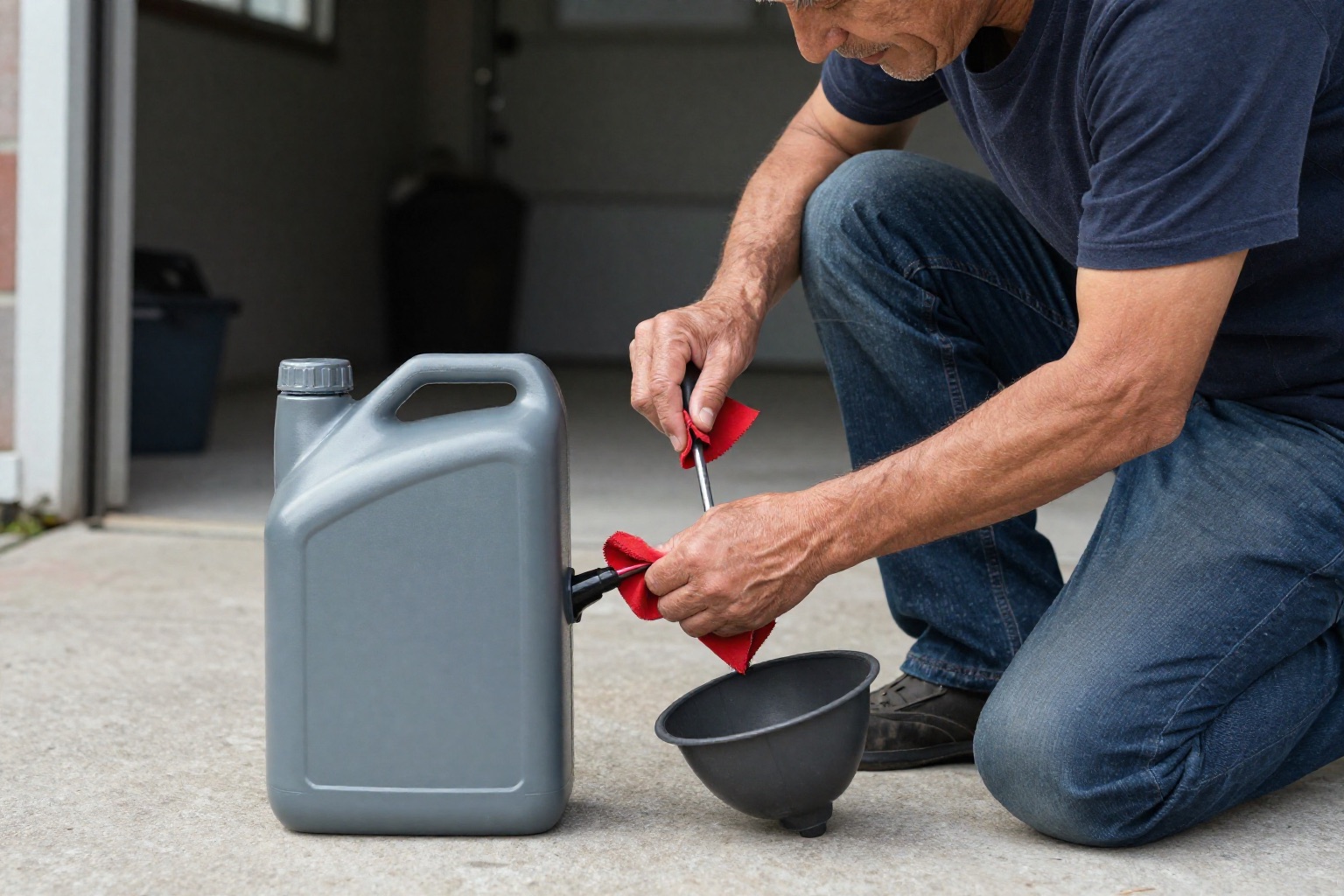
How often to change log splitter hydraulic oil
| Task | Champion 32-ton gas | WEN 56207 electric |
|---|---|---|
| Check hydraulic oil level | every 8 hours or daily | on the dipstick, between the two notches |
| Change hydraulic oil | every 100 hours or every season | after 150 hours or every six months |
| Hydraulic filter | first at 50 hours, then every 100 hours or season | no separate filter listed |
| Engine oil | first change after 5 hours, then every 100 hours or season | (electric motor, none) |
Champion also points at a quiet enemy: a splitter that sits unused through changing temperatures collects condensation inside the tank. That water is a good reason to change the oil on schedule even if you only split a few cords a year.
- Release the pressure first. Engine off, cylinder retracted, then work the valve lever back and forth before opening anything (Champion).
- Hot oil burns. Never open the fill cap on a running or hot machine.
- Bleed screw on electrics. Many small electric splitters have a vent screw you open a few turns before work and close before moving the machine (WEN, Forest Master and AL-KO all have one). On gas machines, Champion warns never to run with the temporary shipping plug in the tank, or pressure builds up inside.
The engine, the wedge and the beam
On a gas splitter the engine has its own schedule. Champion asks for an engine oil change after the 5-hour break-in, then every 100 hours or season, an air filter cleaning every 50 hours, and a spark plug check every 100. Clean debris from the cooling fins and the muffler area as you go.
The rest is quick: wipe bark and dirt off the beam so the wedge slides freely, look over the hoses for cuts or wet spots, and keep the wedge free of nicks. Champion is blunt about why the hoses matter: oil escaping under high pressure can penetrate skin. Keep your hands away from a suspected leak.
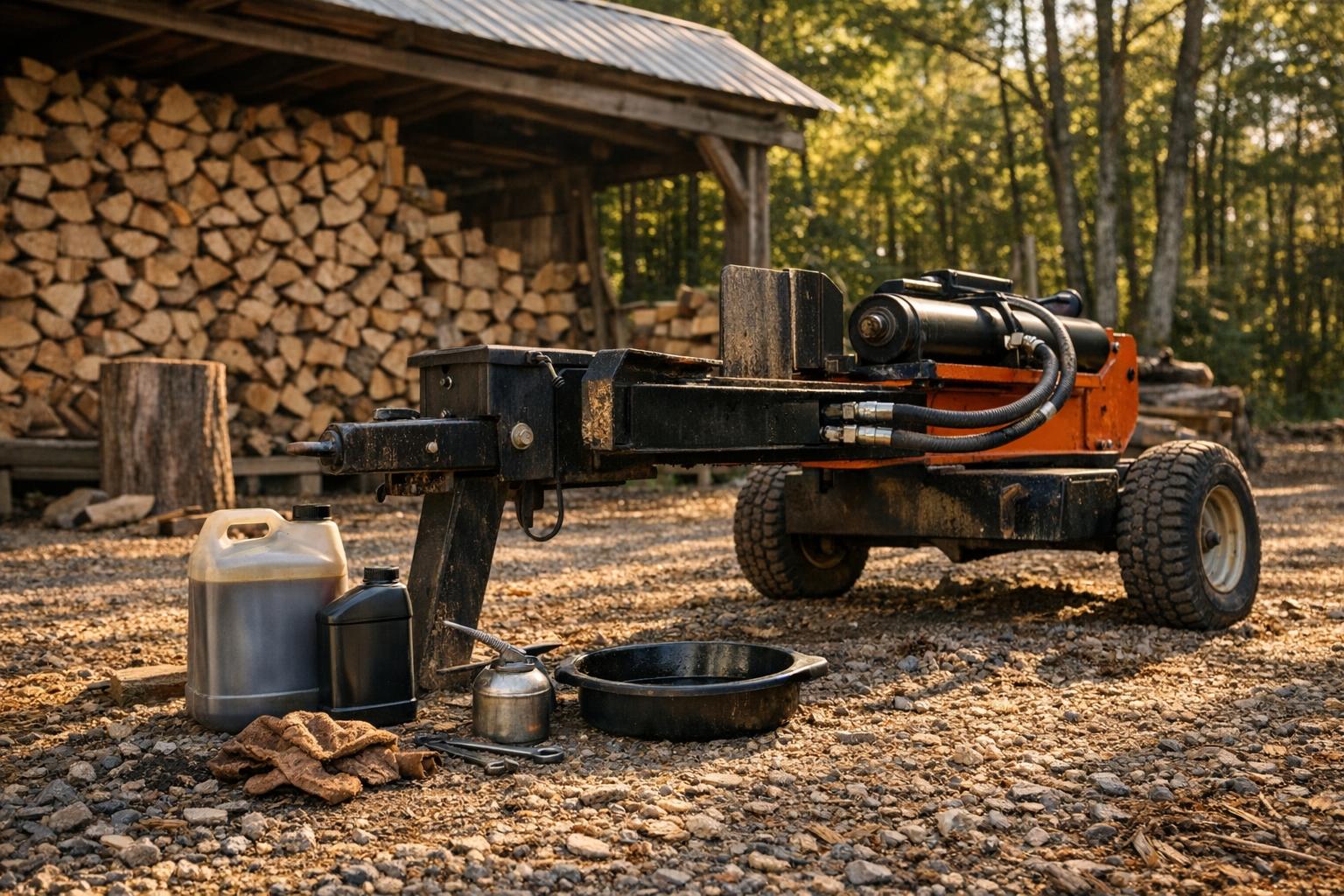
Winter storage and the first start in autumn
- Let it cool. Champion wants at least 5 minutes before storing, then a clean machine.
- Fuel. Follow the engine storage section of the manual: it changes if the splitter sits more than 30 days.
- Cover it. A fitted cover keeps rain out of the tank vent and the controls. Remove it before towing.
- First run. Check the oil level, cycle the ram a few times without wood to purge air, then check again.
Keep a simple log taped inside the cover: date, hours, oil type and level. It makes the next change obvious. Need oil or a cover? Our accessories guide lists the ones worth having, and the safety guide covers the work area.
Questions buyers ask
What kind of hydraulic oil goes in a log splitter?
Whatever your manual names, usually AW32 or ISO 32 anti-wear hydraulic oil. WEN and PowerSmart specify AW32 above 40°F and automatic transmission fluid below. Champion lists ISO 32 or universal hydraulic oil above freezing and ATF below.
How often should you change log splitter hydraulic oil?
Every 100 hours or once a season for Champion’s gas splitters, and after 150 hours or every six months for the WEN electric. Check the level before every session.
Can I use ATF in my log splitter?
Yes, if the manual allows it. WEN, PowerSmart and Champion all list automatic transmission fluid for cold weather, below 40°F or 32°F depending on the maker.
How much hydraulic oil does a log splitter hold?
From about 3 quarts on small electrics (2.9 qt PowerSmart PS90, 3.7 qt WEN 56207) to 5 gallons in the tank of a 32-ton gas splitter like Champion’s.
Our rated picks
Easy upkeep is part of the rating. The YARDMAX YS0650 6.5-Ton Log Splitter (9.1/10) tops our 5–7 ton electric ranking and has no engine to service. For gas, the Landworks 20-Ton Gas Log Splitter (9.2/10) leads our main ranking. For oil, the Factory Racing Oil 214801 ISO 32, 5 gal (7.3/10) is an anti-wear ISO 32 hydraulic fluid in a 5-gallon pail according to the listing, enough for a full change on most gas splitters.

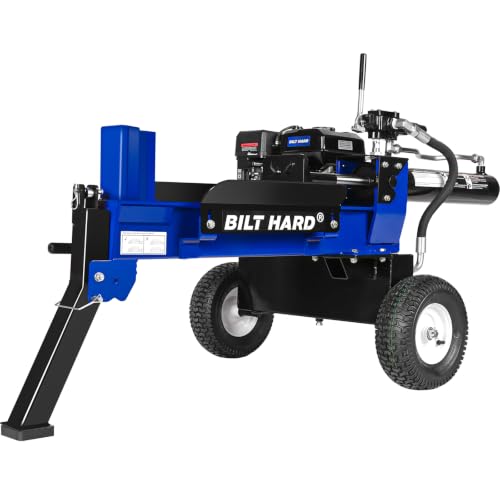

Product images: Amazon listings
Sources
- Champion Power Equipment — Operator's Manual, Model 201313 32-Ton Gas Powered Log Splitter (consulted Nov 2026)
- WEN Products — Model 56207 Lumberjack 6.5-Ton Log Splitter manual (consulted Nov 2026)
- PowerSmart (manual hosted by Lowe’s) — Instruction Manual, 6 Ton Electric Log Splitter Model PS90 (consulted Nov 2026)
- Forest Master — Electric Log Splitter manual, models FM5, FM8 and FM10 (versions D, T and TW) (consulted Nov 2026)
- AL-KO — Betriebsanleitung Holzspalter LSH 370/4, LSH 520/5 (consulted Nov 2026)