Gas vs Electric Log Splitters: The Practical Differences
Electric vs gas log splitters: tonnage, cycle time, cords and outlets, fuel, noise, weight and upkeep compared, with the rated pick for each yard.


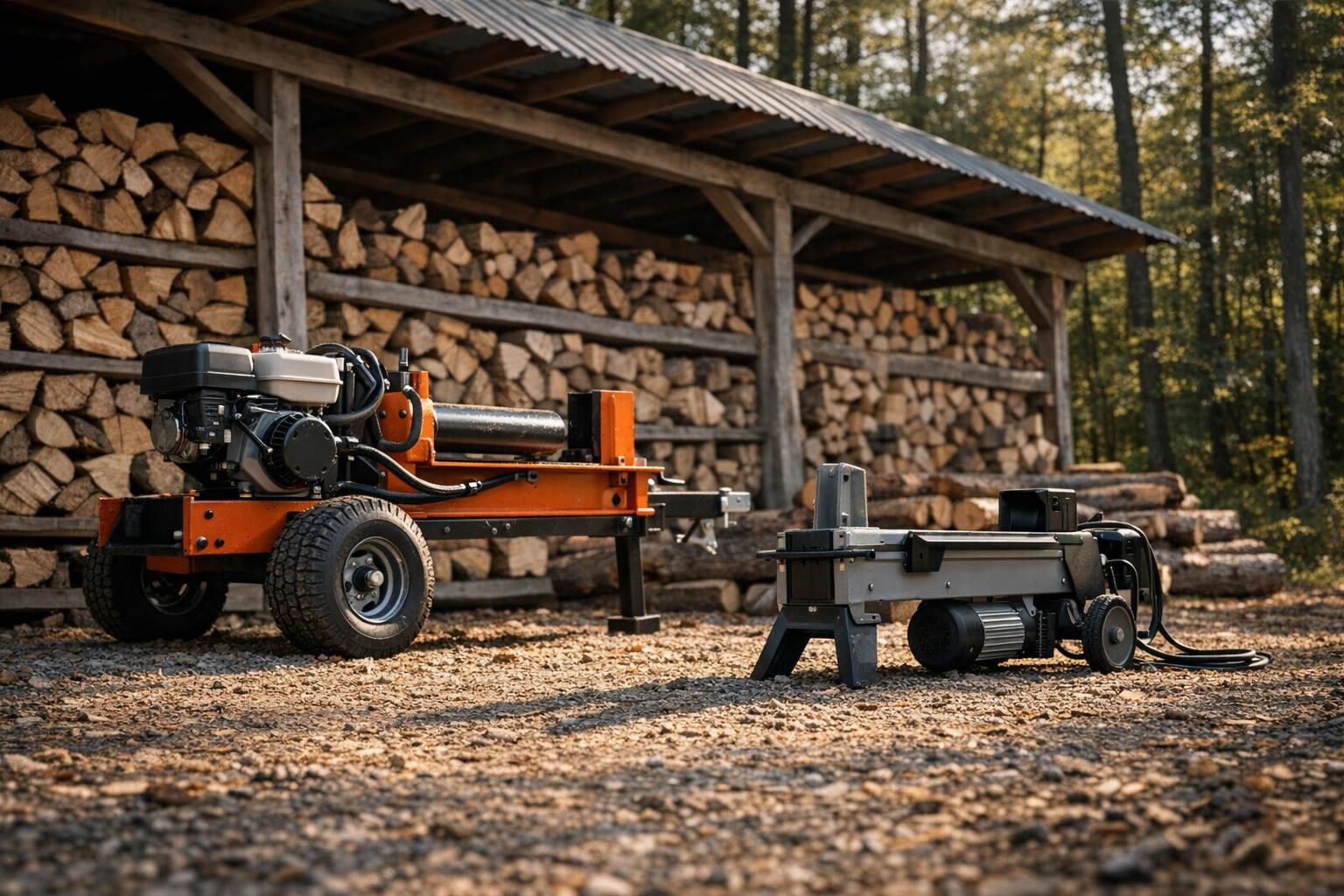
An electric log splitter is the better pick for seasoned firewood split near an outlet: 5 to 7 tons, quiet, light enough to wheel around and no fuel or engine oil. A gas splitter is the better pick for big or green hardwood, or when the wood is far from power: 20 tons and up, faster cycles and vertical modes, at the cost of fuel, noise, exhaust and weight. Where you split and what you split decide it.
Affiliate disclosureAs an Amazon Associate we earn from qualifying purchases.
Electric vs gas log splitter at a glance
| Electric (WEN 56207, PowerSmart PS90) | Gas (Champion 201313) | |
|---|---|---|
| Force | 6 to 6.5 tons | 32 tons |
| Cycle time | 20 to 22 s | 16 s |
| Max log | 20.5 to 21 in long, 10 in diameter | 24 in long, 100 lb |
| Weight | 98 to 104 lb | 495 lb net |
| Power | 120 V, 15 A outlet and the right cord | 301cc engine, gasoline |
| Oil | 2.9 to 3.7 qt hydraulic | 5 gal hydraulic + engine oil |
| Where | outdoors, dry ground, near an outlet | outdoors only, away from openings (CO) |
The gap in force is real. A 6-ton electric handles seasoned rounds up to its stated 10 inches. Above that, or with knotty green hardwood, you are in gas territory. Our tonnage guide has the details.
Electric: what the outlet and cord really mean
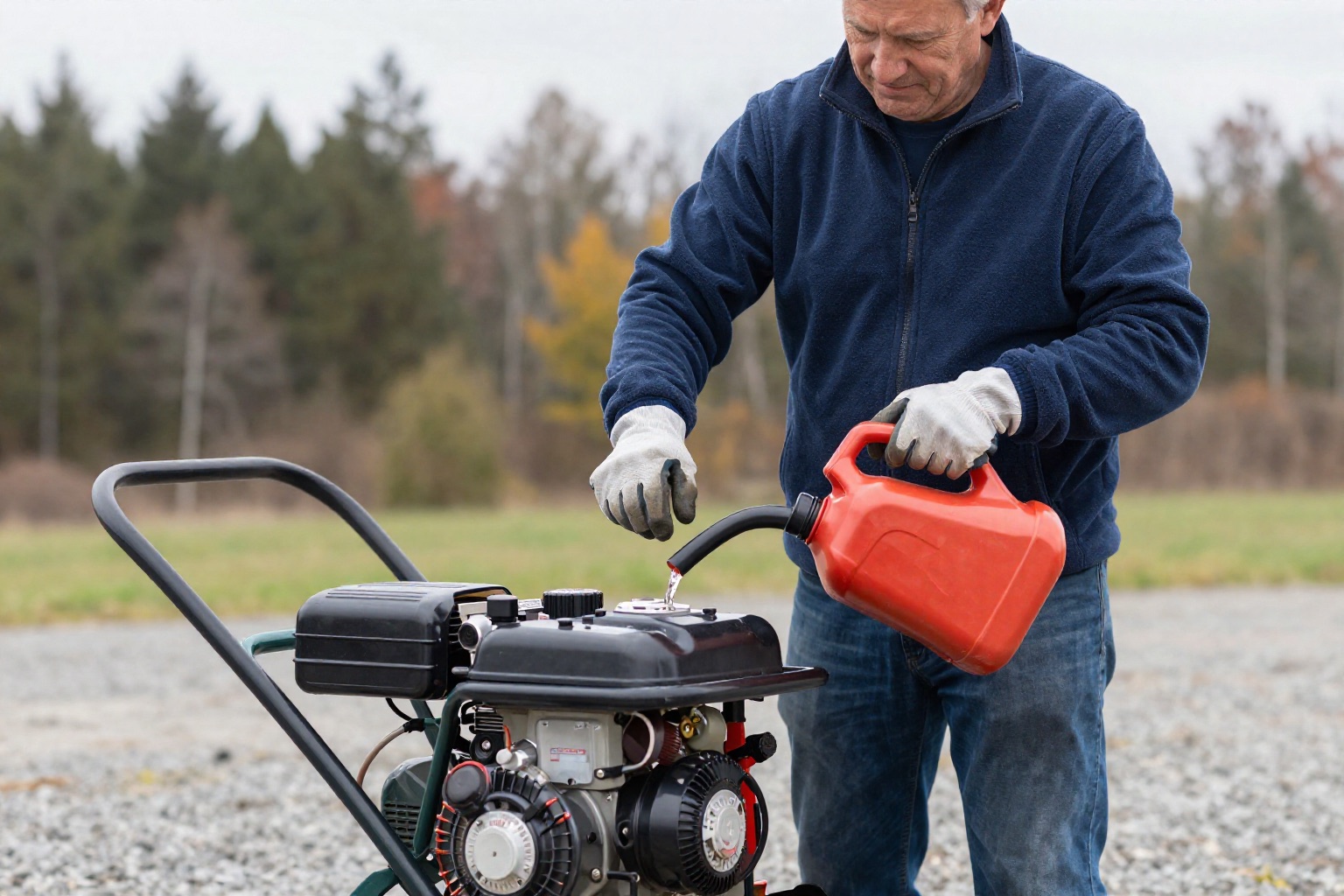
An electric splitter draws up to 15 A on a 120 V circuit. WEN asks for a separate circuit wired with at least 12-gauge wire on a 15 A time-delay fuse, and for an extension cord no lighter than 14 gauge at 25 feet or 12 gauge at 50 feet, and it does not recommend 100 feet at all. PowerSmart keeps it simpler: no longer than 25 feet, 14 gauge, rated for outdoor use. An undersized cord drops the voltage and overheats the motor.
- Good fit: seasoned stove wood, a woodpile within cord reach, neighbors close by, a small shed.
- Bad fit: the wood is at the back of the property, rounds over 10 inches, wet grass (WEN says never use it in wet or damp areas).
Gas: power anywhere, with the engine to match
A gas splitter goes where the wood is, often on its own wheels behind a truck or ATV (see our towable guide). It also brings the jobs of a small engine: fresh gasoline (Champion asks for 87 octane with no more than 10% ethanol), engine oil changes, an air filter and a spark plug, plus carbon monoxide, which keeps it outdoors and away from doors and windows.
Speed is mixed. Gas splitters are faster than electrics, but bigger gas machines are not faster than smaller ones: Champion's 32-ton takes 16 seconds a cycle, while the quickest 20 and 22-ton listings we track claim 7 to 7.5. Our fastest log splitters guide compares them all.
Which one should you buy?
| Your situation | Pick |
|---|---|
| A cord or two of seasoned wood a year, outlet nearby | Electric, 5–7 tons |
| Mixed hardwood, rounds over 10 in, no outlet at the pile | Gas, 20–25 tons |
| Big green or knotty rounds, heavy lifting | Gas, 30–40 tons with vertical mode |
| Noise limits or close neighbors | Electric |
Price belongs in the comparison too. Our guide to cheap log splitters and what you get at each price puts the electric and gas classes side by side, band by band.
Questions buyers ask
Is an electric or gas log splitter better?
Electric for seasoned firewood split near an outlet: quiet, light, no fuel. Gas for big, green or knotty rounds and wood far from power: far more force and vertical modes, with fuel, noise and exhaust.
Are electric log splitters any good?
Yes, within their limits. A 6 to 7 ton electric handles seasoned rounds up to about 10 inches in diameter and 20 to 21 inches long, the capacities WEN and PowerSmart state.
What extension cord do I need for an electric log splitter?
A grounded, outdoor-rated three-wire cord: 14 gauge up to 25 feet, 12 gauge at 50 feet according to WEN. PowerSmart limits its PS90 to 25 feet of 14-gauge cord.
Can a gas log splitter be used indoors?
No. Engine exhaust contains carbon monoxide, and Champion forbids running its splitters in any building, including garages and sheds.
Our rated picks
Electric: the YARDMAX YS0650 6.5-Ton Log Splitter (9.1/10) tops our 5–7 ton electric ranking, and the PowerSmart 6.5-Ton Electric Log Splitter (6.6/10) pairs 6.5 tons with a 15-amp motor and 20-inch logs according to the listing. Gas: the Landworks 20-Ton Gas Log Splitter (9.2/10) leads our main ranking with 20 tons and a 7.5-second cycle.


Product images: Amazon listings
Sources
- WEN Products — Model 56207 Lumberjack 6.5-Ton Log Splitter manual (consulted Nov 2026)
- PowerSmart (manual hosted by Lowe’s) — Instruction Manual, 6 Ton Electric Log Splitter Model PS90 (consulted Nov 2026)
- Champion Power Equipment — Operator's Manual, Model 201313 32-Ton Gas Powered Log Splitter (consulted Nov 2026)