Kinetic vs Hydraulic Log Splitters: What Changes
Kinetic vs hydraulic log splitters: how a flywheel splitter works, 3-second vs 16-second cycles, knotty wood, maintenance and which of our picks fits.

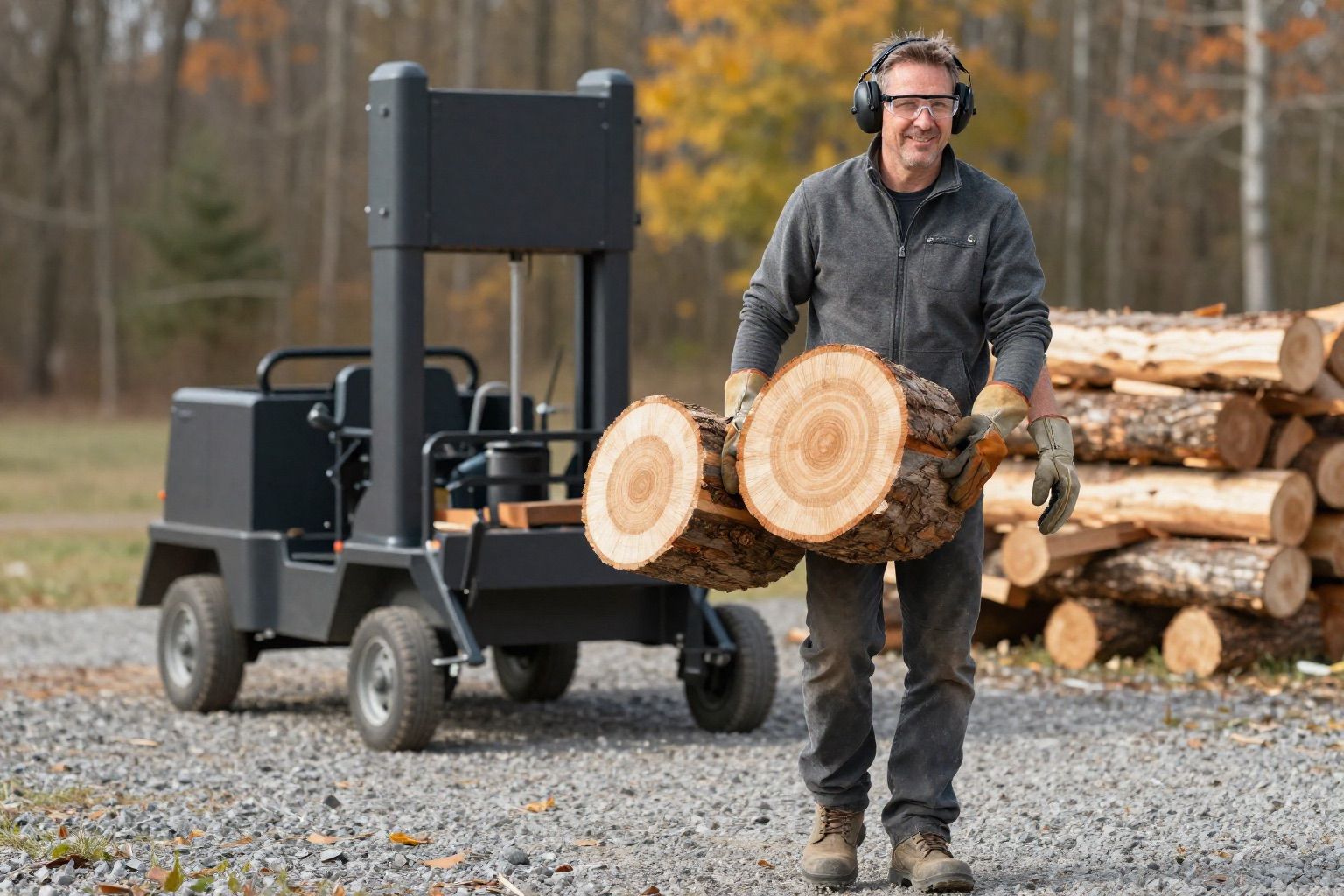
A kinetic log splitter stores energy in one or two spinning flywheels and dumps it into the wedge in a single quick stroke, so a cycle takes about 3 seconds. A hydraulic splitter pushes the wedge with oil pressure: slower, often 15 to 20 seconds a cycle, but it keeps pushing on a knotty round instead of relying on one hit. Speed or stubborn wood, that is the whole decision.
Affiliate disclosureAs an Amazon Associate we earn from qualifying purchases.
How a kinetic log splitter works
The engine or motor spins heavy flywheels. When you pull the lever, a rack engages and the stored energy drives the wedge through the log. DR's RapidFire manual lists flywheels of 55 or 74 lb turning at up to 400 rpm, and Forest Master's Fast Fire uses a single 15 or 19.5 kg flywheel. There is no hydraulic oil, no pump and no valve, which is why DR says kinetic splitters need less maintenance.
A hydraulic splitter works the other way round. A pump fills a cylinder, and the pressure pushes the ram. Champion's 32-ton model, for example, has a 4.8-inch cylinder fed by a two-stage pump at up to 3,600 psi.

Kinetic vs hydraulic: the numbers side by side
| Machine | Type | Cycle time | Log size in the manual |
|---|---|---|---|
| DR RapidFire | kinetic, gas | about 3 s | 24 in long, 30 in diameter max suggested |
| Forest Master Fast Fire | kinetic, 230 V electric or petrol | 3 s | 520 mm long, 400 mm wide |
| Champion 32-ton | hydraulic, gas | 16 s | 24 in long, 100 lb max |
| WEN 56207 | hydraulic, 120 V electric | 20 s | 20.5 in long, 10 in diameter |
Over a morning that adds up. DR puts hydraulic cycles anywhere from 15 seconds to over a minute. Still, loading and stacking take time on both machines, so the saving is smaller than the cycle times suggest. Our guide to the fastest log splitters lines up the cycle times the listings in our catalog state and checks the logs-per-hour claims.
Where a hydraulic splitter still wins
- Knots and twisted grain. A kinetic stroke is one hit. DR's own manual warns that even a small log can be hard to split when it has knots or tough fiber. A hydraulic ram keeps pushing at full pressure until the round gives.
- Very large rounds. The big hydraulic machines go to 33, 37 or 40 tons, with vertical modes for rounds too heavy to lift.
- Choice. Most of the market is hydraulic, from 5-ton electrics to towable gas machines, so it is easier to match your outlet, budget and log length.
Kinetic splitters suit straight-grained wood split in volume: you move fast and the machine keeps up. If your pile is mostly knotty, twisted or very large rounds, a hydraulic splitter is the calmer choice.
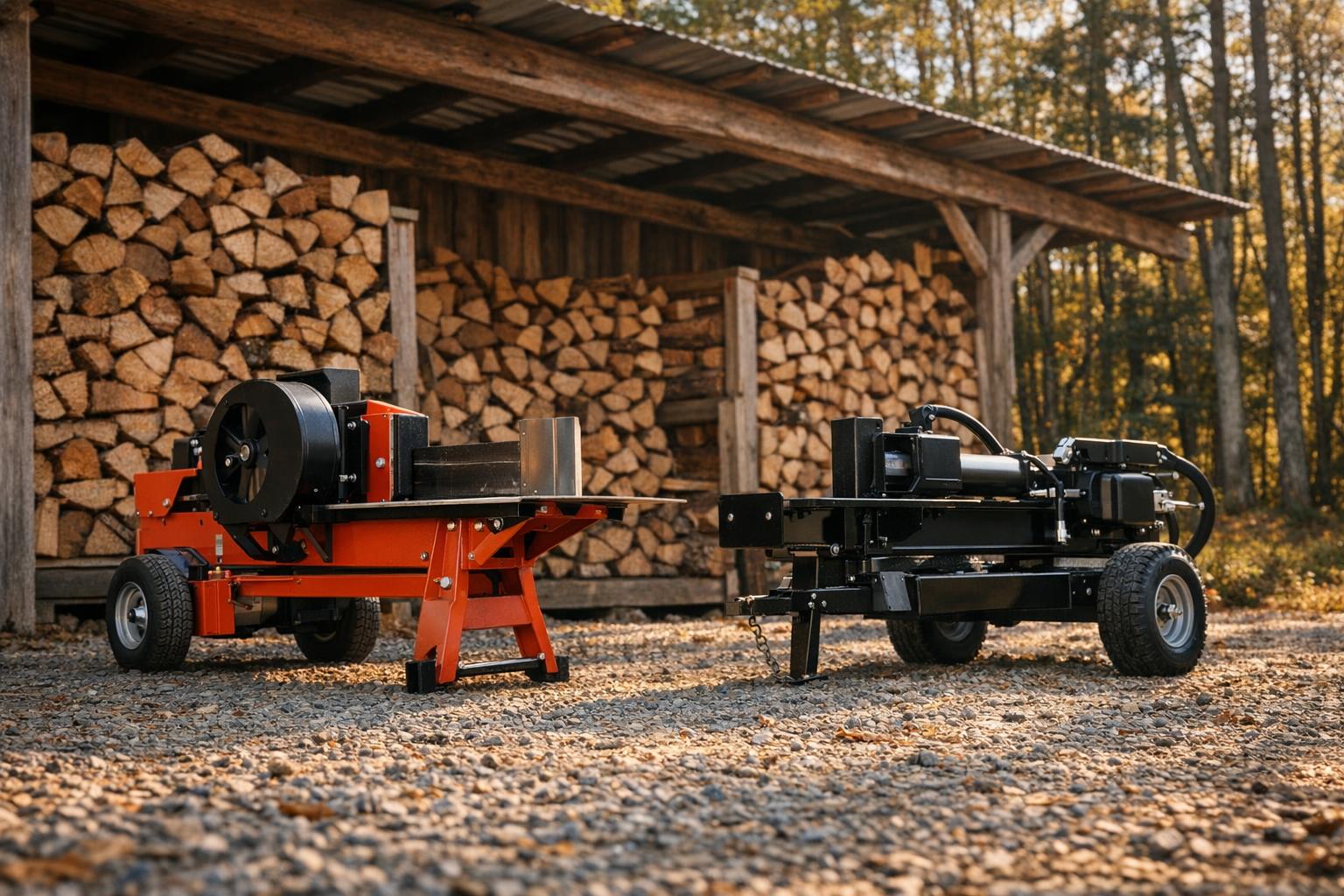
Safety and upkeep on both types
Both run under the same basic rule: one person loads and runs the machine (DR and Champion both say so), with eye protection and others kept clear. The kinetic stroke is fast, so keep your hands off the log once you pull the lever. On a hydraulic splitter, watch the hoses: Champion warns that oil escaping under high pressure can penetrate skin.
Maintenance differs more. A hydraulic splitter needs its oil checked and changed (Champion: hydraulic oil and filter every 100 hours or every season), while a kinetic one has a rack, a wear plate and the flywheel drive to look after (DR's manual covers both). Our maintenance guide has the intervals.
Questions buyers ask
How do kinetic log splitters work?
An engine or motor spins one or two heavy flywheels. Pulling the lever engages a rack that transfers the stored energy to the wedge in a single fast stroke, about 3 seconds per cycle according to DR and Forest Master. No hydraulic oil is involved.
Are kinetic log splitters better than hydraulic?
Faster, not better for every pile. They suit straight-grained wood in volume. For knotty or twisted rounds a hydraulic splitter keeps pushing until the wood gives, which a single kinetic stroke cannot do.
Kinetic or hydraulic log splitter for knotty wood?
Hydraulic. DR’s own manual notes that knots and tough fiber can make even a small log hard to split on a kinetic machine.
Do kinetic log splitters need oil?
Not hydraulic oil: there is no pump or cylinder. A gas model still needs engine oil, and the drive parts need the care the manual lists.
Our rated picks
Want kinetic speed? The 10-Ton Kinetic Splitter, 18.5 in Logs (7.2/10, rated on its listed specs) is a 10-ton double-flywheel electric splitter with a stated 2-second cycle. Browse the rest in our kinetic log splitter collection. Prefer the steady push of hydraulics? The Landworks 20-Ton Gas Log Splitter (9.2/10) leads our main ranking with 20 tons and a 7.5-second cycle according to the listing, and the BILT HARD 22-Ton Gas Log Splitter (7.6/10) claims 7 seconds with a two-stage pump.

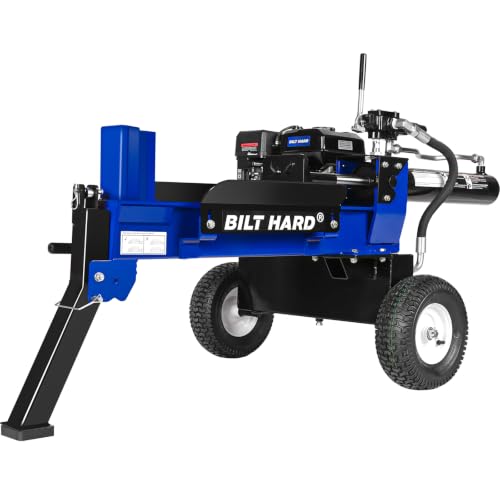

Product images: Amazon listings
Sources
- DR Power Equipment — What is a Kinetic Log Splitter? (consulted Nov 2026)
- DR Power Equipment — Why Are Flywheel Log Splitters Faster Than Hydraulics? (consulted Nov 2026)
- DR Power Equipment (Generac) — DR RapidFire Log Splitter Safety & Operating Instructions (consulted Nov 2026)
- Forest Master — Fast Fire Rapid Log Splitter manual (FMFF 6 and 8 ton) (consulted Nov 2026)
- Champion Power Equipment — Operator's Manual, Model 201313 32-Ton Gas Powered Log Splitter (consulted Nov 2026)
- WEN Products — Model 56207 Lumberjack 6.5-Ton Log Splitter manual (consulted Nov 2026)